Whale shark seasonin Cancún, explained.
Every summer, hundreds of whale sharks gather in the plankton-rich water north of Isla Mujeres and Isla Contoy — one of the largest aggregations on Earth, within day-trip distance of your hotel. Here is how the tours work, what they cost, and who is allowed to take you.
The short version
Whale sharks are filter-feeding giants up to twelve metres long and harmless to people. From roughly 15 June to 15 September they congregate north of Isla Mujeres and Isla Contoy, and July is the peak — the biggest groups and the most reliable sightings. If you are in Cancún in summer and comfortable in open water, it is a real bucket-list swim. Two things to know before you book: who is allowed to take you, and what the morning actually involves.
Only licensed operators can take you
The aggregation sits inside a protected area and Mexico regulates it strictly. Only operators holding a government whale-shark permit may bring swimmers to the animals; licensed boats carry a flag and a permit number, guides are trained, and the number of boats and swimmers is controlled. That is why the sharks keep coming back. Be wary of any beach vendor offering a cheap “whale shark swim”: unlicensed boats face fines, get turned away at the site, and crowd the animals in exactly the ways the rules exist to prevent.
What a licensed tour costs in 2026
- Shared tours: about $150–200 a person. A small fast boat with eight to ten guests, leaving early from Cancún, Isla Mujeres or Punta Sam; snorkel gear, guide and a light breakfast usually included.
- Private licensed boats: from about $2,500. Your own group, your own rhythm at the site, more water time each.
Expect a 45–90 minute ride each way, a 7–8 am start, and a swim that rewards basic snorkelling confidence. Seas can be choppy on the way out — take a motion-sickness tablet if you are prone.
The rules in the water
- No touching — keep about two metres from the body, more from the tail.
- Two swimmers plus a guide per shark at a time; everyone else waits their rotation on the boat.
- Life vest or wetsuit required. No flash, no diving under the animal.
- Biodegradable sunscreen only — better still, a rash guard and no sunscreen before the swim.
What we run — and what we don’t
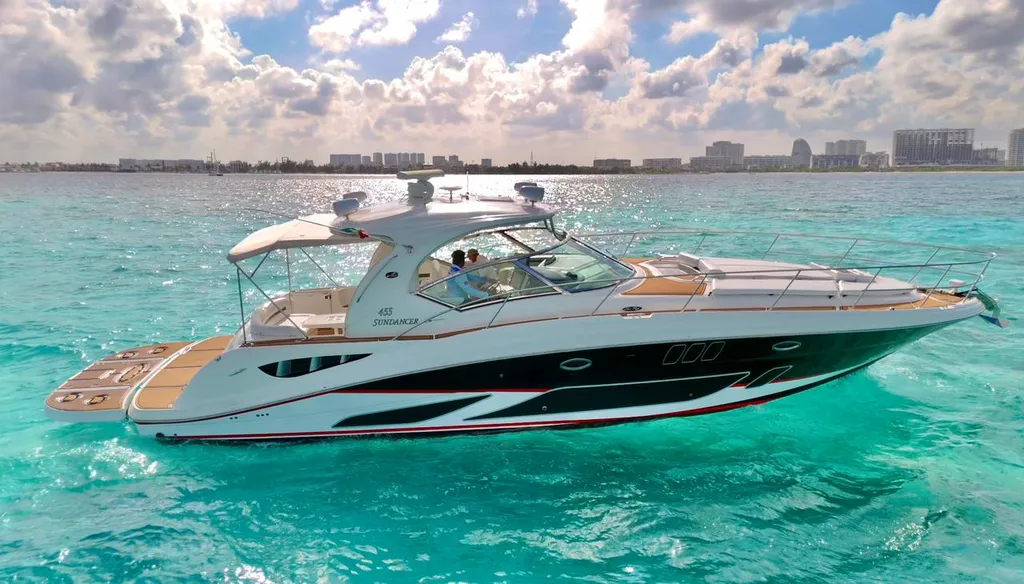
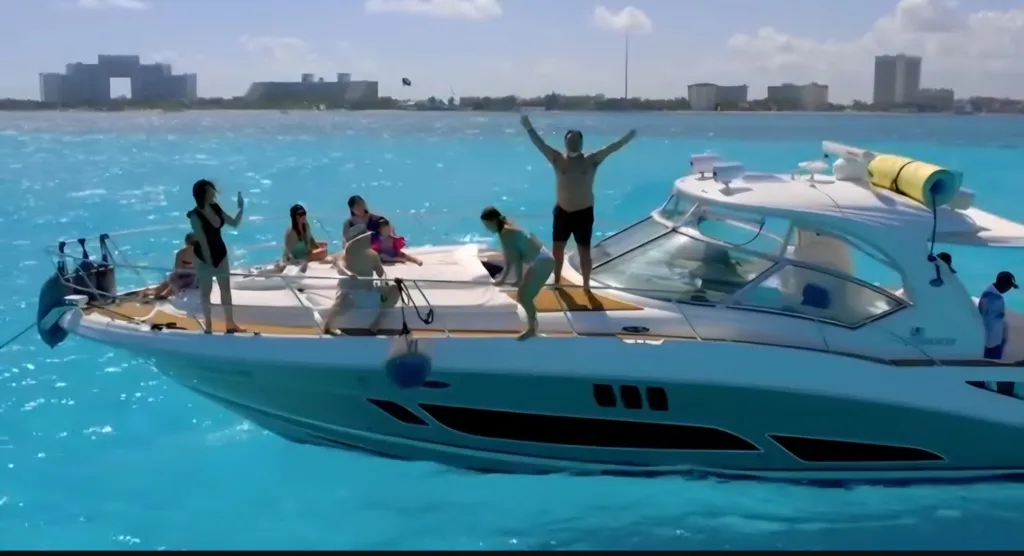
Zamá does not operate whale-shark swims. They require specially licensed operators, and we would rather say that plainly than sell a workaround. What we run is the other kind of day: a private Sea Ray to Isla Mujeres — six hours, your own captain and crew, drinks and snorkel gear, up to fifteen guests. The two pair well because they use your trip in opposite ways: the whale-shark tour is an early-morning mission that leaves everyone happily wiped out by mid-afternoon; the charter is an unhurried day built around swimming, Playa Norte, music and your own pace.
A summer week on the water
Day 2 — whale sharks, morning, licensed operator. Book it early in the trip so you have weather-buffer days; you are back at the hotel by mid-afternoon with the story of the year.
Day 4 — private Isla Mujeres charter. Six hours, up to fifteen guests, $1,150: reef stop, the shallows off Playa Norte, lunch on the island if you like. The full day-trip guide.
Day 6 — sunset hours to close. From $900, the least expensive way to have a private yacht in Cancún, and golden hour over the bay is the best light of the whole camera roll.
Questions people ask
Roughly 15 June to 15 September, with July the peak. Early June and September sightings happen but are less consistent — if whale sharks are the main reason for the trip, aim for July.
Around $150–200 a person on a shared licensed boat, gear and breakfast usually included. Private licensed boats start at about $2,500.
Whale sharks are filter feeders — plankton and fish eggs, not people. They are docile, slow at the surface and uninterested in swimmers. The real risks are sunburn and seasickness.
No. Our charters run the Cancún–Isla Mujeres corridor, not the offshore aggregation, and only licensed boats may approach the animals. Book a licensed tour for the sharks and a charter for the beach day.
A rash guard, biodegradable sunscreen for after the swim, a towel, water, a motion-sickness tablet if you need one, and a waterproof camera. Gear is usually provided.